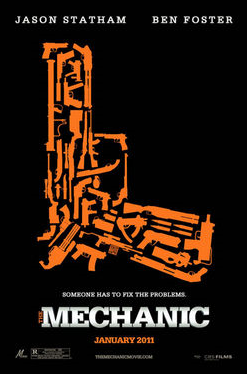
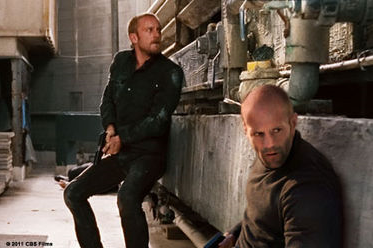
 Arthur returns home to New Orleans to hook up with his best friend and former mentor, Harry (Donald Sutherland). Right when we see Harry, we know he doesn't have a lot of time left in this movie for two key reasons. Reason no. 1 - He's in a wheelchair. People in wheelchairs tend not to last very long in action movies, especially those starring Jason Statham. And reason no. 2 - He's played by an actor like Sutherland, who's obviously too good for this material. We're right on both counts. Arthur gets his next job from his slimy boss, Dean (Tony Goldwyn), and the target for the job just happens to be Harry. Arthur seems conflicted about having to kill his friend, but eventually goes through with it. Harry at least is a good sport about it, saying he's glad Arthur is the one who gets to put a bullet in him.
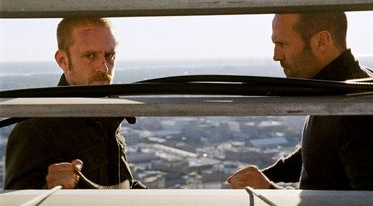
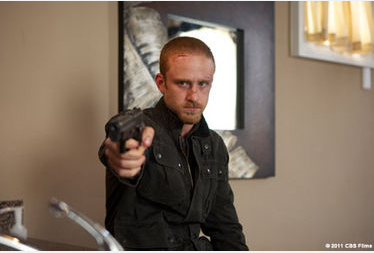 Through dialogue, we learn that Harry had an adult son whom he was not on good terms with. Said son shows up after his father's death. That would be Steve (Ben Foster), who shows up before Arthur, wanting to learn his trade, as he wants to hunt down and kill the people who murdered his father. Of course, Steve doesn't know that Arthur is responsible. Regardless, Arthur takes him under his wing, and tries to teach him how to be an assassin. Problem is, Steve has a very violent mean streak, and would prefer to mangle his targets into a bloody mess, rather than silently sneak in and get the job done. Regardless of their differing approaches to killing people, the two become partners, especially when they go up against the corrupt Dean.
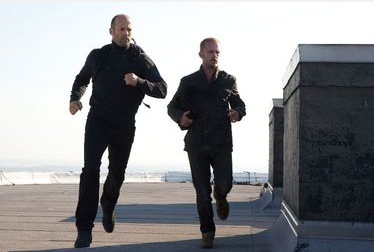 There's a lot of style and flash in The Mechanic, and director Simon West (who's past experiences in the action genre include Tomb Raider and Con Air) stages some impressive stunts, such as when Arthur and Steve have to escape a hotel after their presence is detected immediately following a successful hit. As impressively mounted as the film is, I found it hard to care about what was going on. That's because the movie is icy underneath. Everyone is a silent killer or dealing with murderous rage issues, and the script never bothers to dig much deeper than that into the cast. Don't get me wrong. Killers can and have made fascinating characters in movies before. But both Statham and Foster seem to be playing merely at the surface level. They sneer and look threatening, but there's nothing underneath.
 To be fair, the movie does eventually turn into non-stop sound and fury, so we don't have time to complain that the characters in the middle of it all have no real personality. I guess this is the director's way of saying we shouldn't be putting too much thought into this film. It sure does get ridiculous, though. This is one of those movies where a garbage truck (driven by Arthur) can ram a car into a burning bus in the middle of a city street, and nobody seems to notice. (Nobody notices the bus being carjacked and exploding, either.) I know, I'm not supposed to be thinking about this kind of stuff. I'm just supposed to get caught up in the over the top action. I probably would have if I felt like I hadn't seen it all before. As impressive as the action usually is, it's never very original.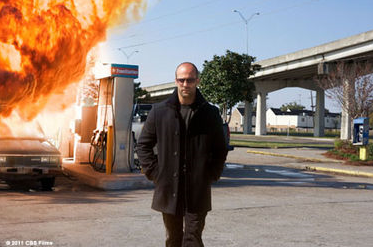
See the movie times in your area or buy the DVD at Amazon.com!
 I feel I should pay credit where it's due - Director Mikael Hafstrom (who made a much more successful thriller almost four years ago called
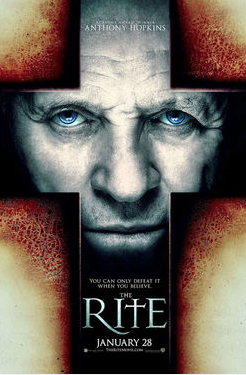
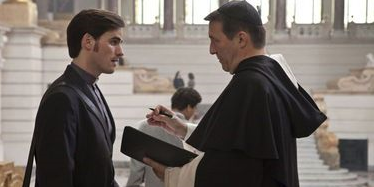
 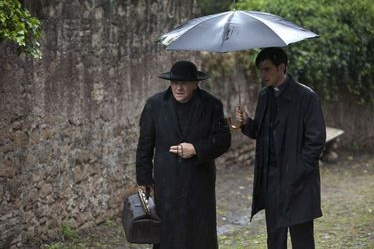 Apparently when he said that, he did not read very far into the script. Michael arrives in Rome a total skeptic, making plenty of logical and scientific explanations to explain away "demonic possessions" in his classes. So, he's teamed up with Father Lucas (Anthony Hopkins), a grizzled and dry-humored veteran who has done battle with the Devil's minions many times, and has no need for skeptics. He takes young Michael under his wing, and begins taking him along on some of his jobs. The early scenes establishing the relationship between Michael and Father Lucas are promising, but don't add up to much. I did appreciate Hopkins' performance, and how he finds the right balance of noble teacher and dry wit. In the film's single funniest moment, Father Lucas has to take a call on his cell phone while in the middle of an exorcism, leaving Michael to handle things on his own.
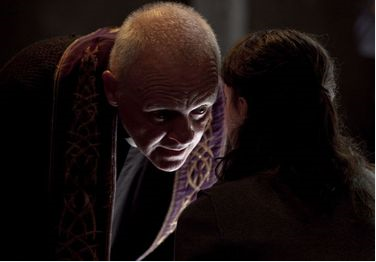 At this point, the movie was about an hour in, and while I was not exactly engaged, I was intrigued. The movie makes a lot out of Michael questioning his faith, and whether the things he sees when he follows Father Lucas on his jobs are really acts of the paranormal, or an elaborate hoax being played either by the patients or the Father. In fact, the movie makes too much out of it. The first half is a fairly long slog of too much dialogue, and not much else happening. Michael keeps on doubting that evil and the Devil exists. Well, of course we know they exist. The movie would be a total cheat if they didn't. The main patient that Father Lucas visits is a pregnant 16-year-old girl who claims to be possessed by a demon. I'm trying my best to avoid spoilers here, but I will say that whatever force is controlling the girl soon moves on to another body, and Michael must throw away any doubt he has to save himself.
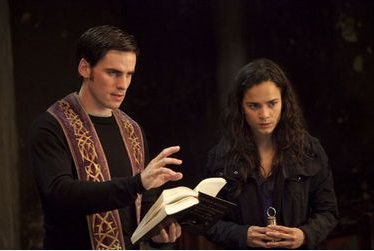 It's at this point that
 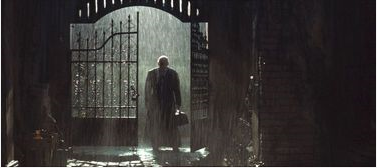 By the time the third act rolls around, the movie dips so much so into nonsense and supernatural cliches that we just can't take it seriously anymore. Everything goes up to overkill levels - The effects, the performances, and especially the atmosphere. All dramatic storytelling and characterization fly out the window. It turns into one big excuse for Hopkins (who up to this point was fairly subdued) to ham it up, and for O'Donoghue (a relative newcomer) to look like he's intimidated to be acting in the presence of Hopkins. As Michael, O'Donoghue is an attractive face, but he can't quite make his character come to life. Whenever he's with the film's female lead, a reporter investigating the Vatican (Alice Braga), or taking center stage as the hero during the film's insane climax, he's just not that convincing.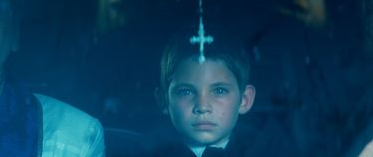
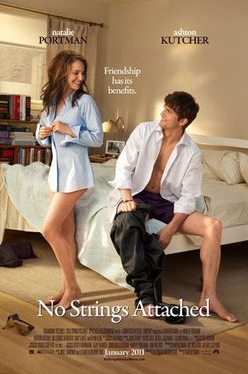
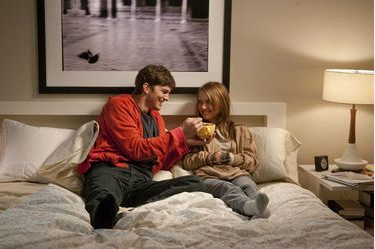
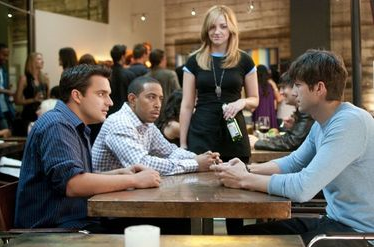 But let's get back to Adam and Emma. The movie opens with a montage of them meeting at different points in their lives, and things not working out. They first meet as awkward pre-teens at a summer camp, then at a college frat party, and finally as adults. Emma's a medical doctor, though we never actually see her working or handling any patients. She just walks down the halls, having colorful conversations about sex with her girlfriends. Adam is a low-level assistant on a TV show that can't seem to decide if it wants to be a parody of
 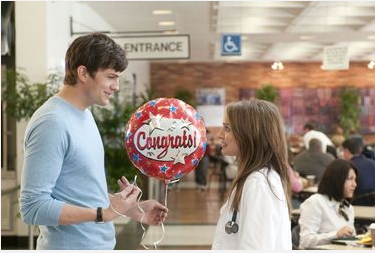 A sexual relationship without any intimacy or meaning is a good deal for Emma, as she has to work odd hours at the hospital, and can call upon Adam for quickie sex anytime she wants. Adam's okay with it too at first, but we can tell almost from the start that he's attracted to her, and wants more out of their relationship. This is when the movie stops being about "friends with benefits", and becomes yet another movie where the two lead characters avoid the inevitable conclusion that they're meant for each other in order to pad out the running time. This wouldn't be so bad, but some of the decisions these characters make don't make any sense. Adam has feelings for Emma, but is willing to date other women when she suggests it. Emma isn't interested in a traditional relationship, then begins dating a fellow doctor while she's having sex with Adam. Later, she seems to be developing genuine feelings for Adam, only to act horrified when Adam admits his feelings for her, and physically attacks him for doing so. These characters are so hard to pin down, it's impossible to care about them.
 What frustrated me the most about
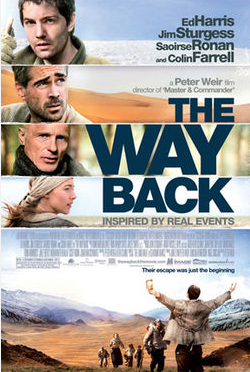
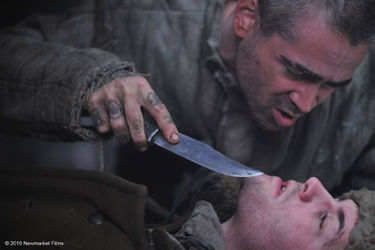 The film is inspired by a best-selling Polish memoir about a journey on foot across Siberia and the Mongolian desert by a group of escapees from one of Stalin's prisons during World War II. There has been some controversy as to whether or not the book is a hoax, or if the event even happened. Knowing little about the book and the controversy surrounding it, I can't comment, but I will say that Weir directs the film with an unflinching eye toward the harshness of life in the prison camp during the film's opening half hour or so. There's a sense of realism as we witness the prisoners being worked to death, or splitting off into small fractions amongst each other, creating different groups and walks of life within the prison walls. The performances that Weir gets out of his cast also adds to the effect, as everyone here is very understated, and don't play up the melodrama of the situation. They seem like real people who once were living normal lives, and now find themselves facing death and starvation.
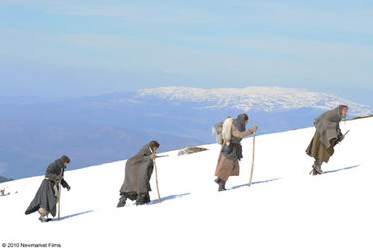 The lead prisoner that the screenplay (co-written by Weir) focuses on is a Pole named Janusz (Jim Sturgess), who finds himself in the prison when his wife is forced by the government to testify against him, accusing him of being a spy against Stalin. After a few months of hardships in the camp, Janusz befriends some of his fellow prisoners, and devises a plan to escape to freedom. There are seven in all in the initial group, with key members being an American who goes by the name of Mr. Smith (Ed Harris) and a Russian criminal named Valka (Colin Farrell). As they escape into the woods to begin their journey, I admired the film's sense of detail, such as a sequence that shows them crafting crude masks out of tree bark in order to protect their faces from the biting wind during snowstorms. Along the way, they pick up a runaway teenage girl named Irena (Saoirse Ronan from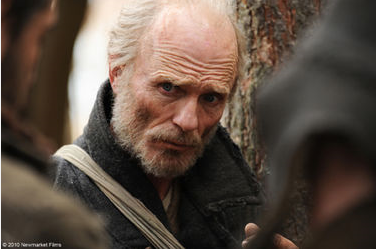
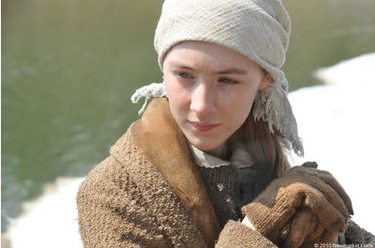 That being said, the movie does lack a dramatic focus, which ultimately holds it back from being the great film it could have been. So much of the movie is devoted to the characters walking, that no one really gets a chance to step up and become the heart of the movie that we can relate to. It's not that the characters are unlikable or hard to relate to. It's simply that the script never gets around to making any of the individual members of the group truly stand out. The performances certain stand out, but the characters as they're written needed to stand out more, I felt. If there was more of a dramatic arc, or someone we could really get behind, this movie could have been inspiring as well as honest and well-shot.
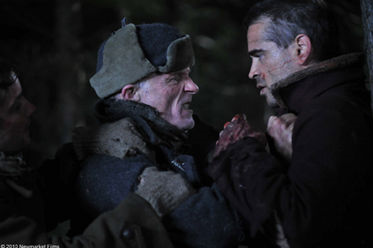 But, perhaps Weir is trying to show us how the ordeal ground down these men to the point that they did not really resemble who they once were. It's a valid argument. The characters are forced to act as a unit for much of the film, and while this prevents the movie from finding one character whom we can get behind, it does a good job of showing how these people from different walks of life can band together. Whether intentional or not, I must report on how I felt watching the film, and I admit, I was intrigued the entire time. The pacing is slow, but never boring. And I liked how the film focused on their survival techniques, such as finding water in the desert, or finding other means to stay hydrated when water is not available.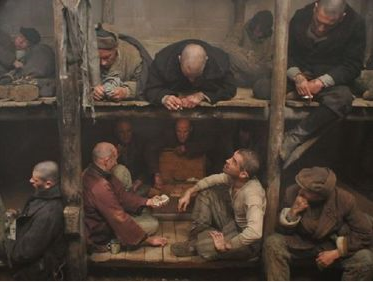
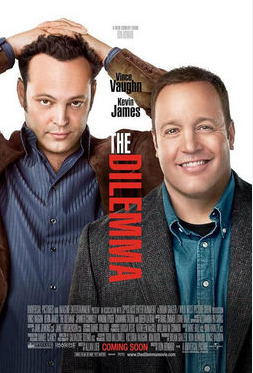
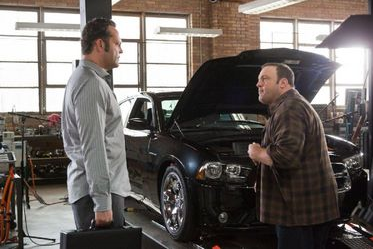
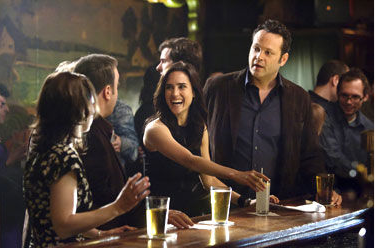 The setup concerns Ronny (Vince Vaughn) and Nick (Kevin James) - Best friends since college, and business partners in a small automotive design company that they started together. They're on the verge of a contract with Chrysler, which could put their company into the big leagues. In their private lives, the guys are generally happy. Nick is the straight-arrow type, happily married to his college sweetheart, Geneva (Winona Ryder, continuing her strong comeback that started with last month's
  To Ronny's credit, he does confront Geneva fairly quickly when they are alone. She confirms what he saw, but says it was nothing serious. And besides, she says that Nick has been so focused on work, he never has time for her anymore. He also has a bad habit of sneaking off at night, saying he has a "business meeting". Has Nick been entirely faithful to her? Regardless, Nick is his best friend, and Ronny wants to tell him about what he saw. There just never seems to be the opportunity. That, and Geneva doesn't hold up on her "it was nothing serious" statement, and keeps on seeing the younger guy. And when Ronny threatens Geneva, she blackmails him back, forcing him to keep quiet. Meanwhile, all of this secrecy, sneaking around, and strange behavior has aroused Beth's suspicions, as she thinks Ronny is back to his old gambling habits. For once, this is not the case of the Idiot Plot at work. Anyone who has ever lived with or dealt with an addict, even a recovering one, knows how easy it is to suspect unusual behavior.
 This obviously brings up a lot of tough questions for anyone watching the film. Unfortunately,
 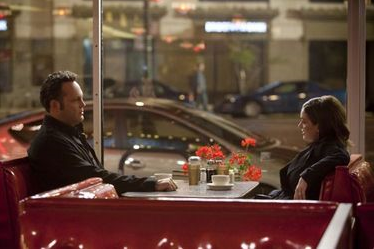 Scenes like the one above almost made me give up on the film, but then a scene would come along that would restore my faith in it. These scenes revolve around the characters acting like adults, and actually handling the situation maturely. I was especially impressed with the way the film's final moments handle some of the trickier issues. Aside from an ill-advised and unnecessary fight between Ronny and Nick in a business waiting room, the movie's final 20 minutes or so are surprisingly smart. Likewise, the scene where Ronny confronts Geneva in a diner is another standout, due to the dialogue, and the performances by Vaughn and Ryder. It's interesting to watch the characters struggle for control and power as they threaten each other and try to gain the upper hand. I also liked the way the movie handles the outcome of Kevin and Geneva's relationship. It avoids melodrama, it's powerful and to the point, and it's an honest outcome and realization for both characters.
 So, why make it a comedy? The jokes don't work, but the drama does. Granted, Vaughn gets a couple laughs, many of which come across as being improvised. Other than that, the movie just doesn't seem comfortable trying to give a light-hearted spin to this situation. Was it the screenplay? Did Howard force an ill-advised re-write when comic actors like Vaughn and Kevin James got involved? I honestly can't say. All I know is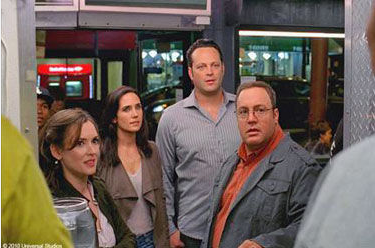
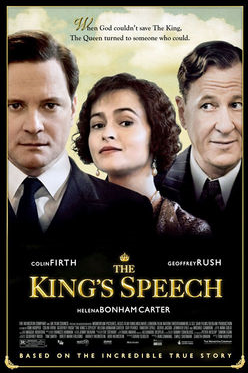
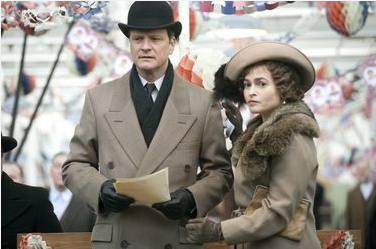 The film is a fairly standard dramatic retelling of the rise of King George VI (played with much conviction by Colin Firth), and his long personal battle with a childhood speech impediment. As the film kicks off, he's still Prince Albert (Bertie to his friends and family), and he gives a disastrous public address at Wembley Stadium in 1925, thanks to his uncontrollable stutter. Certain that his brother Edward (Guy Pearce) is next in line for the throne after their father (Michael Gambon), Albert shies away from public view, and tries a variety of quack doctors to help with his impediment. That's when his wife, Elizabeth (Helena Bonham Carter, understated and charming here), discovers the services of Lionel Logue (Geoffrey Rush), an Australian wannabe actor turned unorthodox speech therapist, who believes that his particular method of treatment can help her husband. Lionel's methods clash with Albert initially, as Lionel does not believe in making house calls, and also insists on treating Albert as an equal, referring to him as "Bertie" instead of a royal title. Naturally, the two eventually begin to bond, especially when Albert learns that he can control his stutter.
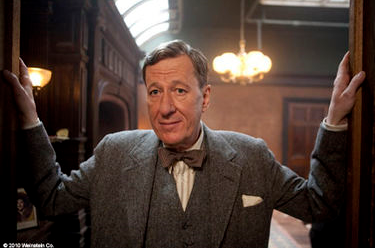 There are subplots, of course. One concerning his brother Edward, and his desire to to marry a twice-divorced American woman. A scandal rises because of this, forcing Edward to give up his crown after he takes the throne with their father's passing. This leaves Albert as the King just as World War II is about to erupt. There are some cameos by historical figures to give the film some context, including Winston Churchill (Timothy Spall, giving a dead-on performance), but the real heart of the film is not the historical trappings, but rather the relationship that builds between the future King, and his speech therapist. The screenplay by David Seidler (
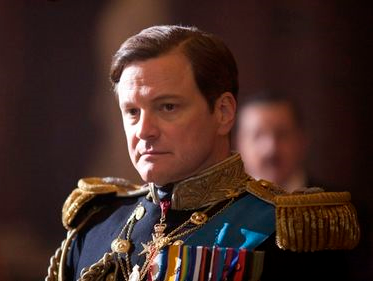 It is the performances that truly give
 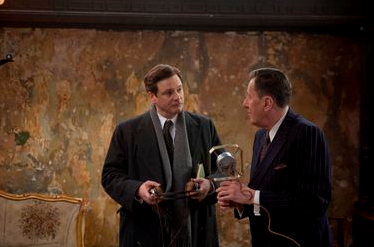 Meeting him every step of the way is Rush, giving one of his best performances in a while. He rises above the cliche of the offbeat mentor, and turns Lionel into a fleshed out character with a family, personal desires, and a genuine bond that we can feel growing with Firth's character as the film progresses. Likewise, Helena Bonham Carter (best known for her offbeat work in Tim Burton's films these days) gets to display some genuine warmth here, and is quietly understated. Yet, she never disappears into the background, like you expect her to. She's a constant presence in the life of her husband, and gives the sense that she is just as important to the King's emotional and vocal healing as the speech therapist is.
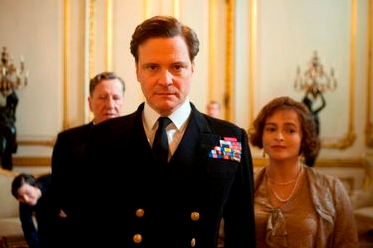 So, is this just a feel-good movie with a lot of great performances to lift it above the norm? While it does suffer from some trappings of the genre (certain lines, like when Firth bellows "I have a voice" in defiant anger, seem tailor made to be an Oscar clip or a clip for the trailer), what pushes it above the norm is not just the performances, but that it is also highly entertaining to watch. The movie never slows down in its nearly two hour run time, nor does it ever feel it is losing focus on the characters by cramming in too much historical detail. Director Tom Hooper (TV mini-series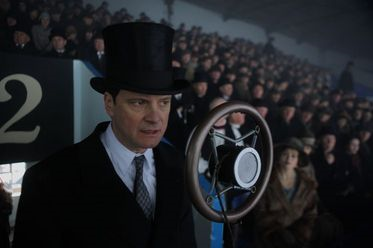
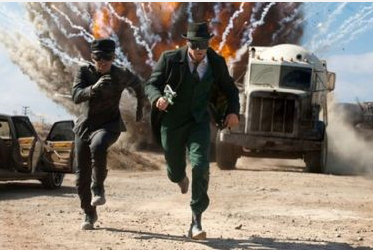 This is a shockingly inept movie, made much more so by the fact that the director is the very fine Michael Gondry (
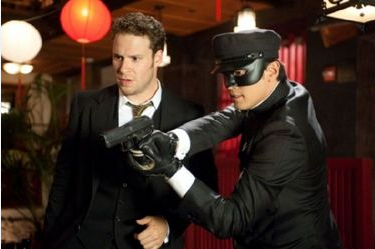 Even if you have no history with
 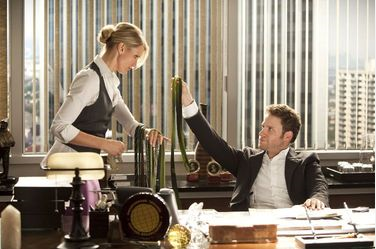 The movie spends a lot of time (too much time, actually) going nowhere, as we're subjected to scene after scene of Rogen's trademark man-child humor, where he reacts to literally everything around him with a "gee whiz, this is cool" kind of naivety. It's kind of amusing as he marvels at Kato's various weapons and inventions with a child-like wonder ("You're like a human Swiss Army Knife", he says at one point), but grows tiresome when you realize it's all the character is built on. Everyone else is given very little to work with. Jay Chou shows some charisma as Kato, but he's forced into the background too often by his co-star's constant yammering. As for Christoph Waltz, it's only fitting that he follows up one of the more memorable villain roles in recent memory in
 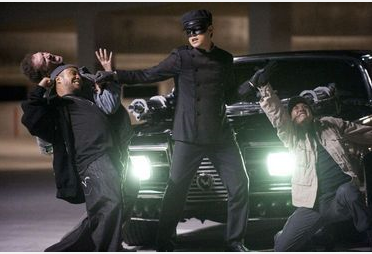 In Hollywood's never-ending quest for the all mighty dollar,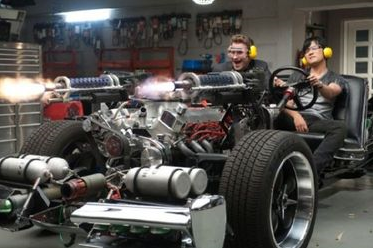
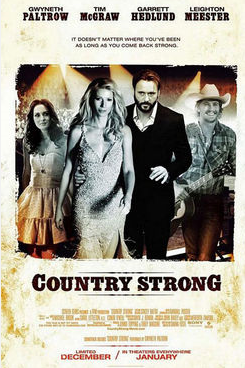
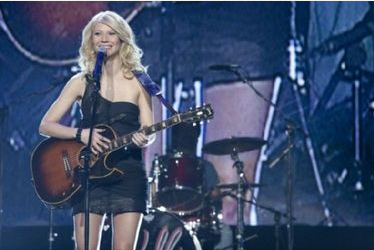 As the film opens, we're introduced to Kelly Canter (Gwyneth Paltrow), a star in the country music world who has fallen on hard times personally, and is being forced into a comeback by her husband/manager, James (Tim McGraw). We learn that months ago, Kelly was drunk while giving a concert, fell off the stage, and miscarried a five month pregnancy. She's been at rehab since then, trying to put her life together, and flirting with one of the orderlies there. That would be Beau (Garrett Hedlund from
 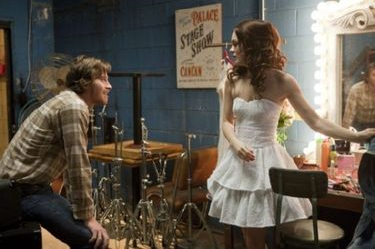 The movie sets up its multiple plots quickly. Kelly and Beau are obviously attracted to each other, as Kelly feels the love has gone out of her relationship with her husband. But has it really? The marriage between Kelly and James seems to be whatever the screenplay wants it to be, whenever it deems it convenient. Sometimes, James is a cold and distant husband. Sometimes, he's cruel and harsh. And sometimes, he's soft and sympathetic. We don't spend enough time alone with these characters to truly get an angle on just how they feel about each other. Likewise, we don't get close enough to Kelly to fully understand her past demons. We know she has a history of drug and alcohol abuse, but don't really get a clear picture as to what has caused it. Was it the stress of her career? Stress of her marriage? The movie doesn't so much develop these characters, rather it checks off the expected cliches (substance abuse, marriage on the rocks), and expects that to be enough.
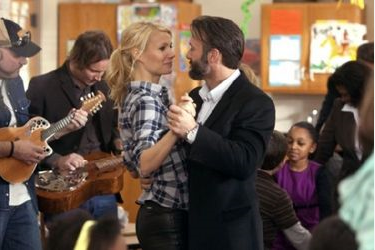 There are similar problems for the other two main characters in the story - Beau and Chiles. At the beginning, Beau resents Chiles, seeing her as a spoiled and talentless girl who gets by on her looks. The movie seems to feel the same way, and depicts Chiles as being almost shallow early on. Still, Beau ends up helping her out when she freezes on stage while singing a song. Seeing them sing together is enough to convince James to bring them both along on his wife's comeback tour as the opening act. Once again, Beau is not happy about this. And yet, as the movie goes on, Chiles' personality begins to soften, and darn it, she actually starts to show that she's more than just a pretty face. Suddenly, Beau starts to feel romantically drawn to her, and the movie starts to like her, too. It feels forced, though. The feelings they develop for each other seems like a necessity for the script, rather than a natural thing that develops over time.
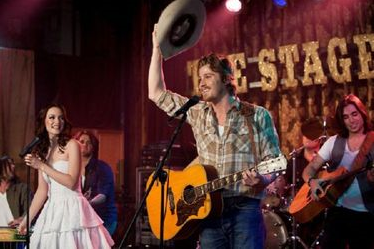 It doesn't take long for
 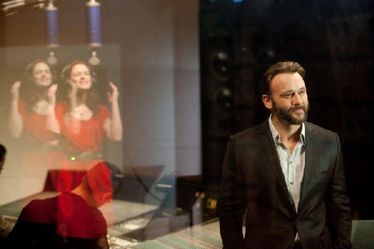 But, of course, some people won't care about that. They'll only care about how the movie looks and sounds. And does it ever look and sound good. The performances are great all the way around, even when the script gives them little to work with. But it's the music performances (of which there are many) that the film is rightfully banking on. The songs are spirited, and the performances (especially the one by Paltrow) are genuine show-stoppers. The movie shows a real knowledge for talent and flashy entertainment, but whenever the characters step off stage, it gets thrown out of its comfort zone. Paltrow comes across as a natural up on stage, performing in front of stadiums. Quite an impressive feat. But when it comes time for us to feel for her, we're left feeling cold.